

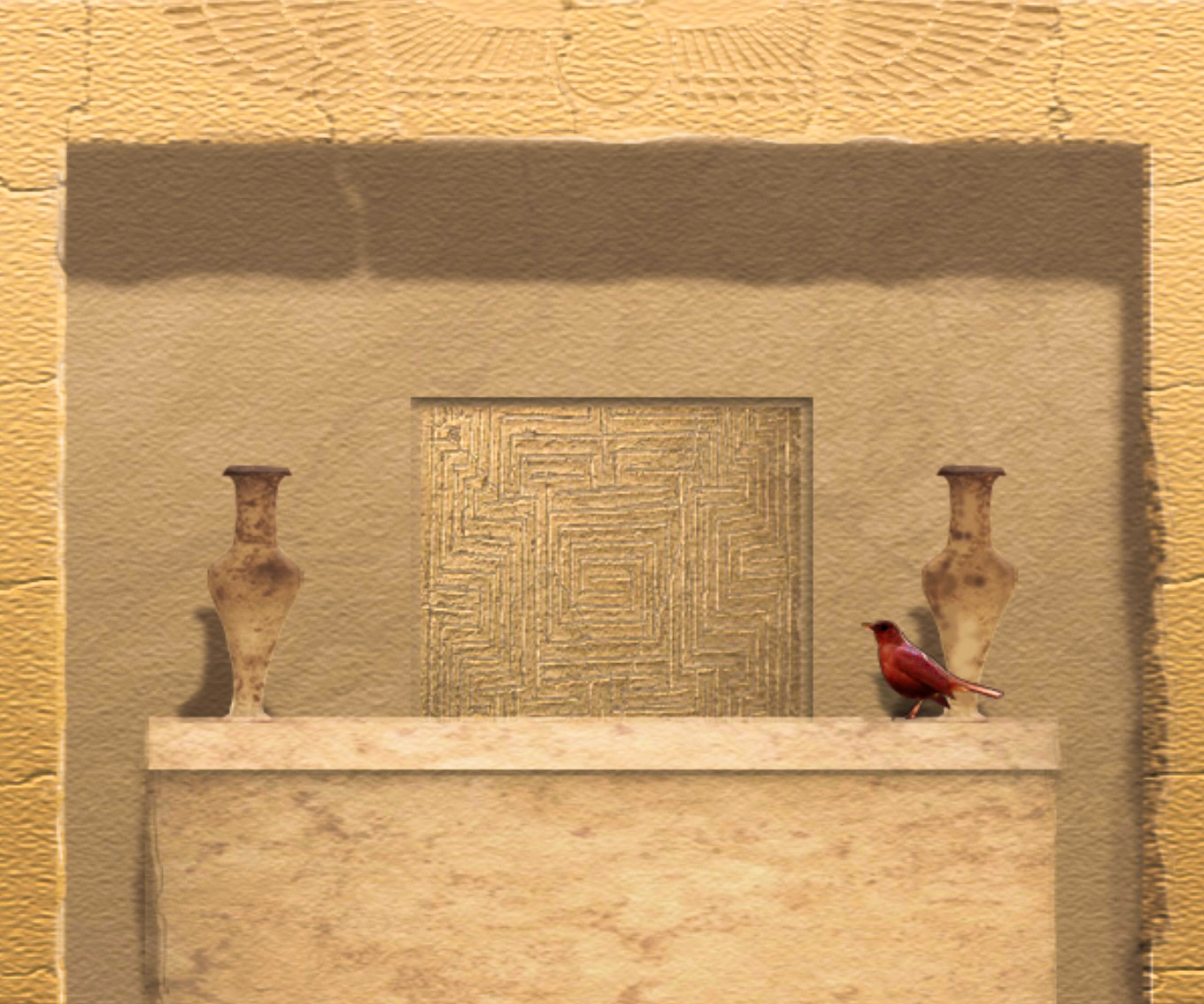
For over eighteen years, the symbol of the Red Bird has haunted my unconscious mind, emerging repeatedly in dreams and meditations as an enigmatic puzzle demanding resolution. This persistent archetypal image, appearing with the regularity that Carl Jung would recognise as a manifestation of the collective unconscious (Jung, 1968), remained frustratingly elusive despite my attempts to decode its significance. Only recently, whilst engaging with the dense and revelatory pages of Dr. Bob Plimer’s Egyptian Trilogy, The Flesh of Re (Plimer, 2019), did the scattered fragments begin coalescing into a coherent understanding, revealing the profound wisdom of ancient Egyptian spirituality through this mysterious avian symbol.
The journey of discovery began when certain passages from Plimer’s work started to resonate with unprecedented clarity. The declaration that “every man, every woman is a star,” echoing through Aleister Crowley’s Thelemic philosophy, suddenly aligned with my years of inexplicable attraction to this red-winged messenger (Crowley, 1904). As Crowley proclaimed in Liber AL vel Legis, “we are all free, all independent, all shining gloriously, each one a radiant world” (Crowley, 1904, I:3), the Red Bird began to reveal itself as the embodiment of this stellar individuality, a symbol of the soul’s inherent divinity expressing itself through the ancient Egyptian understanding of spiritual transformation. The Red Bird, I discovered, represents far more than mere ornithological symbolism. It embodies the mystical current that flows between four fundamental aspects: Star, Akh, Magick, and Individual. This group of four, reflects what the Egyptians understood as the active process of spiritual becoming, a concept that resonates deeply with the Western esoteric tradition’s emphasis on conscious evolution. The star represents our divine origin and destination, the Akh our transfigured spiritual state, Magick the transformative power through which change occurs, and the Individual the unique vessel through which this cosmic drama unfolds.
Central to this understanding is the concept of Akh (often transliterated as akhu in scholarly texts), which Egyptologist Mark Smith describes as “the transfigured soul that has successfully navigated the afterlife and become an entity capable of interacting with both the divine and the living” (Smith, 2009, p. 156). This transformed state represents the culmination of the soul’s journey through death and rebirth, a process documented extensively in the Duat Guidebooks—those remarkable collections of hieroglyphic texts and illustrations that map the geography of the Egyptian underworld. These ancient manuscripts, including the renowned Amduat (literally “That Which Is in the Afterworld”), provide detailed navigational instructions for the soul’s nocturnal journey with the sun god Ra through the twelve hours of night (Hornung, 1999). What strikes me as particularly significant in my personal odyssey with the Red Bird is how the soul, according to these ancient texts, actively chooses its path through the afterlife. This element of conscious decision-making resonates with the existentialist philosophy of Jean-Paul Sartre, who argued that “existence precedes essence” and that we are “condemned to be free” (Sartre, 1946). The Egyptian understanding suggests that even in death, or perhaps especially in death, the soul retains its capacity for self-determination, selecting the route that aligns with its deepest will and spiritual inclination.
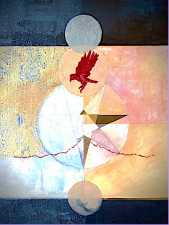
The spiritual geography of this transformation centres upon Rostau, a term that carries profound metaphysical significance. Meaning “the mouth of the passages” or “doorway to the underworld,” Rostau was closely associated with the Giza necropolis, that magnificent complex of pyramids and temples that continues to inspire wonder and speculation (Lehner, 1997). Rostau represents more than a physical location; it embodies the sacred threshold overseen by Osiris, the great god of death and resurrection, where souls begin their circular journey from solar radiance to earthly dust, preparing for eventual rebirth. This cyclical understanding echoes the Hindu concept of samsara and the Buddhist wheel of becoming, suggesting universal patterns in humanity’s attempts to comprehend the mystery of consciousness and continuity beyond physical death. The circular nature of this journey—from Solar to Dust and back again—reflects what Mircea Eliade termed the “eternal return,” the mythic consciousness that perceives time as cyclical rather than linear (Eliade, 1954). In my own experience with the Red Bird, this cyclical understanding has been crucial. The symbol has appeared, disappeared, and reappeared in my consciousness with a rhythm that suggests not linear progression but spiral development, each return bringing deeper layers of meaning and understanding.
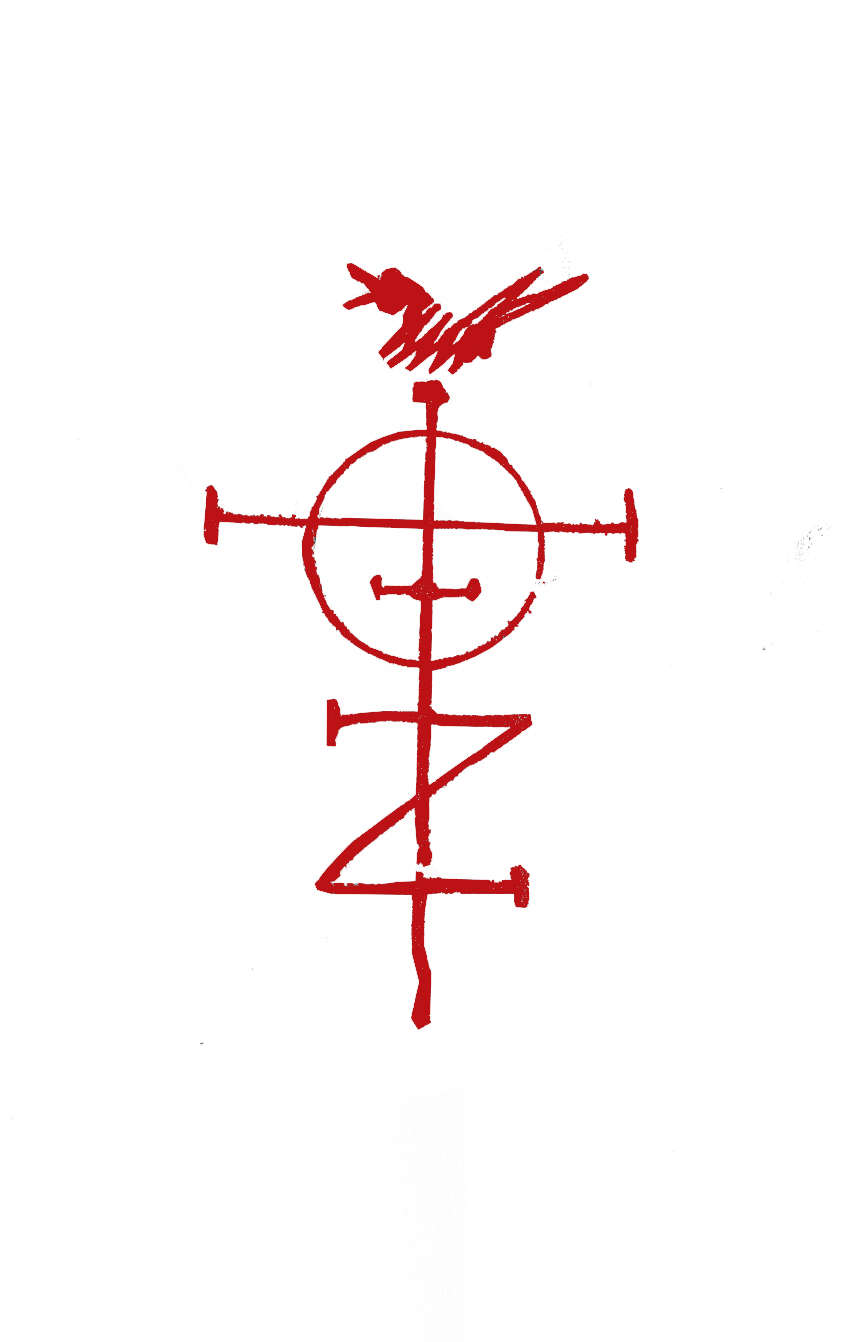
Guiding this profound process is Sokar, the Memphis god whose significance extends far beyond his primary role as deity of the dead. Sokar governs mummification and resurrection, presiding over the delicate art of preserving the physical form while facilitating the soul’s transition to higher states of being. His association with the “Opening of the Mouth” ceremony—a crucial ritual ensuring the deceased’s ability to breathe, eat, and speak in the afterlife—reveals the Egyptian understanding that consciousness requires not just survival but active engagement with one’s environment (Taylor, 2001). Particularly intriguing is Sokar’s role as fashioner of silver bowls, a detail that immediately evokes the alchemical tradition’s emphasis on silver as the lunar metal, nightside, associated with receptivity, reflection, and the feminine principle of wisdom (Jung, 1968).
The journey of spiritual transformation involves the growth and maturation of three essential soul components, each representing different aspects of human consciousness. The Ba, often translated as personality or soul, represents the unique individual character that persists beyond death—what we might call the essential self (Assmann, 2005). The Ka, frequently rendered as vital essence or life force, embodies the animating principle that connects the individual to the cosmic life energy pervading all existence. The Akh, as previously discussed, represents the transfigured spirit that has successfully integrated these various aspects into a unified, illuminated consciousness capable of functioning in both mortal and divine realms. These three aspects find their unifying principle in the remarkable deity Nehebkau, whose very name—”he who brings together the kas” or “he who nourishes the kas”—reveals his function as the cosmic force responsible for soul integration (Wilkinson, 2003). As a primordial snake god, Nehebkau embodies the ancient wisdom that recognises the serpent as a symbol of transformation, healing, and gnosis. His role in unifying the soul’s various aspects after death points to a profound understanding of consciousness as inherently fragmented in life but capable of integration through spiritual work and, ultimately, through the transformative experience of death and rebirth.
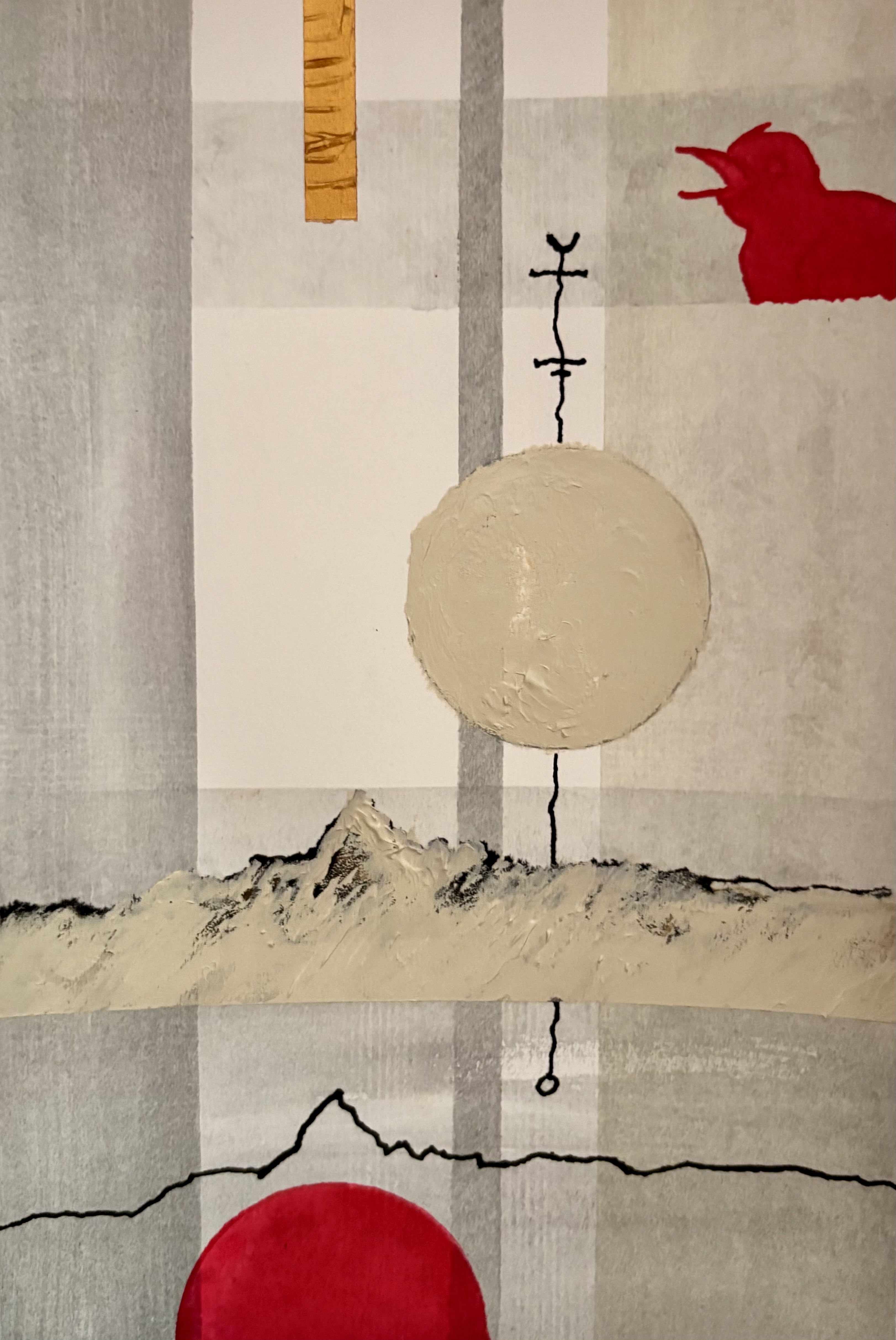
This serpent deity embodies what I have come to understand as the synthesis of seemingly opposing forces: the celestial transcendent impulse that draws consciousness upward toward divine realisation, and the chthonic earthbound energies that ground spiritual insight in practical wisdom and embodied experience. Together, these create what the ancients envisioned as a symbolic axis connecting earth to sky, representing the full spectrum of spiritual experience available to human consciousness. This vertical axis mirrors the shamanic understanding of the World Tree, the Hindu concept of Mount Meru, and the Kabbalistic Tree of Life, all pointing to universal patterns in humanity’s attempt to map the relationship between transcendence and immanence (Campbell, 1949). The serpent-bird unification that Nehebkau represents resonates through numerous mystical traditions, suggesting archetypal patterns that transcend cultural boundaries. The image of the Ouroboros—the serpent devouring its own tail—meets the Phoenix in its endless cycle of death and rebirth, creating a powerful symbol of eternal renewal that speaks to something fundamental in human consciousness (Neumann, 1954). The Caduceus of Hermes, with its intertwined serpents and wings, represents the marriage of earthly wisdom with celestial insight, while Quetzalcoatl, the feathered serpent of Mesoamerican tradition, embodies the same integration of chthonic and celestial principles (Eliade, 1964). All these symbols point toward what the alchemical tradition called the unio mystica, the mystical union of opposites that results in the philosopher’s stone of integrated consciousness (Jung, 1968). They are, in essence, angelic in the truest sense of the word: messengers bringing news of transformation, bridges between the human and divine realms, representatives of consciousness in its most expanded and integrated form.
Through this extended journey of discovery, spanning nearly two decades of unconscious preparation followed by the recent breakthrough of conscious understanding, I have come to recognise that the Red Bird symbolises this transformative current in its most personal and immediate form. It represents the Star-Akh-Magick-Individual pathway that each soul may choose to follow, but more specifically, it embodies my own chosen path through the labyrinth of spiritual development. What began as an inexplicable symbol haunting my psyche has revealed itself as a form of spiritual DNA, encoding the pattern of my individual navigation through the mysteries that have called to me across nearly two decades of seemingly random but ultimately purposeful encounters with the numinous.
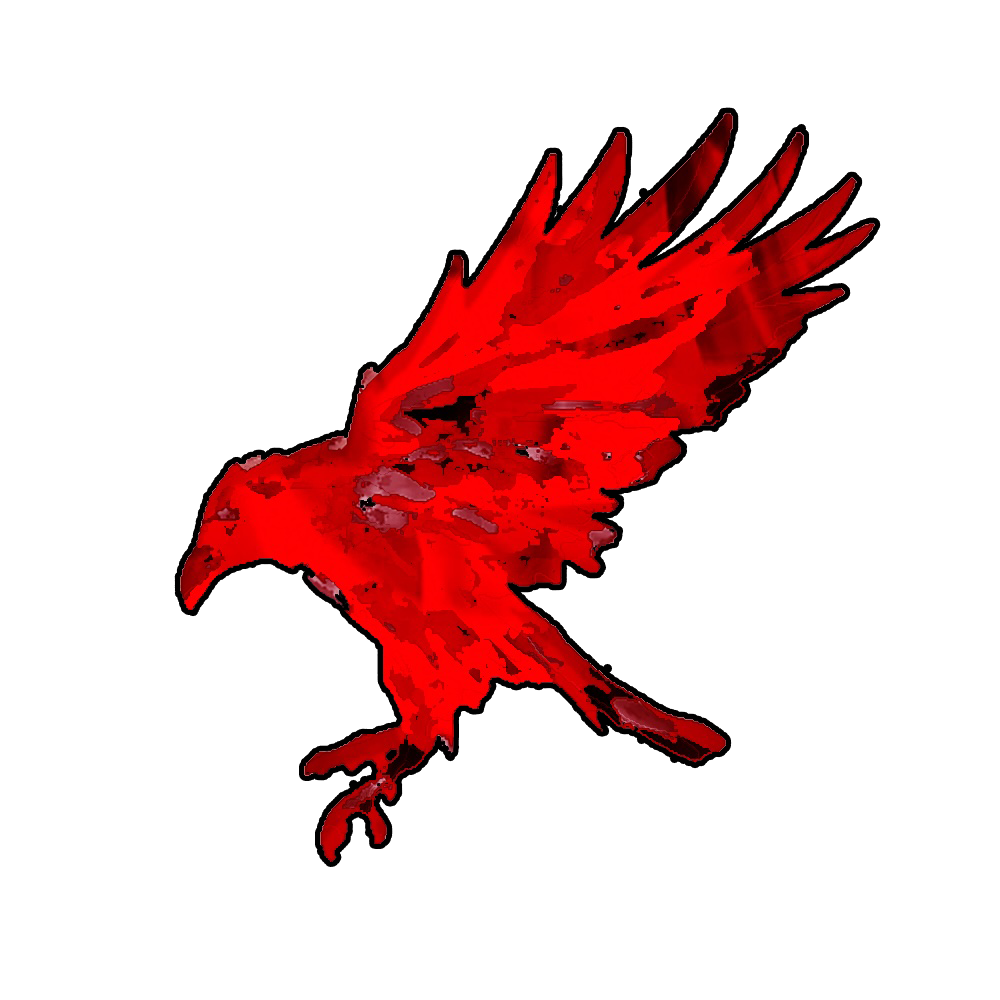
The Red Bird, therefore, represents not merely humanity’s eternal journey towards divine realisation through conscious spiritual development, but the unique signature of my own soul’s trajectory through the infinite possibilities of becoming. It stands as a testament to the Egyptian understanding that each individual consciousness is both universal in its cosmic connections and unique in its chosen unfolding path, Deleuze and Guattari (1987) springs to mind here. In recognising this symbol’s significance, I have not solved a puzzle but rather discovered the key to a door that opens onto ever-deeper mysteries, each revelation leading not to closure but to expanded questioning and wonder. The eighteen-year gestation period of this understanding now appears not as delay but as necessary preparation, a slow cooking of consciousness that has allowed the various ingredients of insight to blend and mature into their proper proportions. Like the alchemical process itself, this work of understanding cannot be rushed but must follow its own natural timing, guided by forces beyond the conscious will but not contrary to conscious aspiration.
The Red Bird has taught me patience, persistence, and the profound truth that some knowledge can only be received when consciousness has been properly prepared to contain it.

The God behind the God, what hath Atum wrought. The Red Bird rests on the perch.
 Nat - I'm just a work in progress
Leave a comment